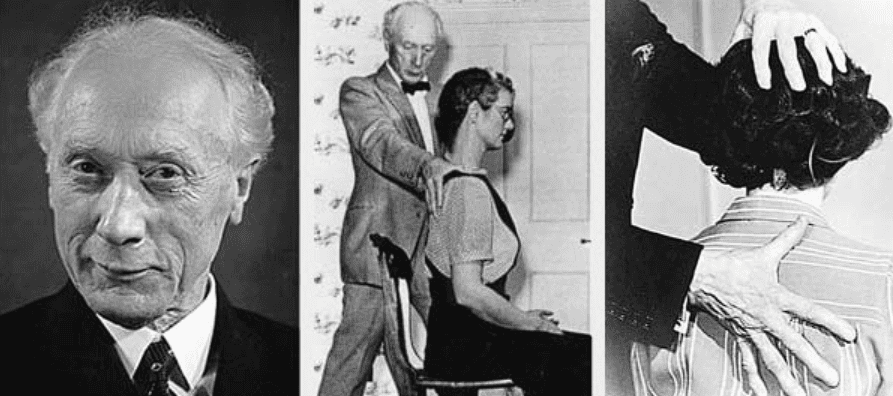
The Alexander Technique (AT) was developed by F.M. Alexander over 120 years ago and is practiced around the world. It is a method of conscious thought wherein one learns to inhibit habits of undue tension and direct one’s physical use to better coordination. This healthier total body pattern enables one to gain improved mobility, posture, performance and focus, which can lead to relief of pain, tension and stress.
While students leave the studio with a feeling of lightness, the Alexander Technique is not a treatment, but a lesson. A skilled teacher can help bring about a hitherto unknown ease and efficiency, and also reveal to the student how to bring this relationship about themselves. With continued practice with self observation and thinking, a student can continue to find improvements between lessons and over time find relief from many forms of pain and dysfunction.
The best, and perhaps the only way, to understand more is to experience the Alexander Technique firsthand by having a lesson with an Alexander Technique teacher.
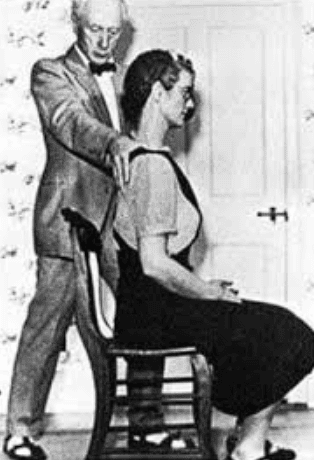
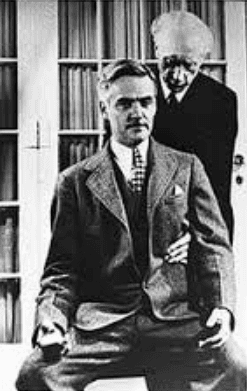
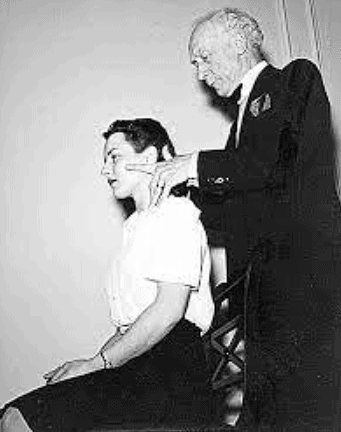
The Alexander Technique was developed by F.M. Alexander (1865-1955), a Shakespearean actor from Australia whose career was stalled by chronic voice loss. After doctors failed to help, Alexander embarked on an investigation of his habits, his reactions, and his use, noting habitual strain through his whole body.
He began to cultivate his mind-body connection to bring awareness to physical habits, and through his method was able to inhibit undue tension and direct his use in an optimal total body pattern. His voice was restored through this newfound easeful coordination, and he returned to the stage transformed. He had not only found a means whereby his voice was restored, but discovered a method of addressing undue tension anywhere in the body.
Others heard of his success and sought him out to help with their own problems, which is how Alexander developed the hands-on method of teaching. He moved to England, teaching the Technique to influential thinkers and artists including John Dewey, George Bernard Shaw, Aldous Huxley, and Nobel Prize-winning scientists Nicholas Tinbergen and Sir Charles Sherrington. He wrote four books on the subject and eventually established a training course for teachers so others could teach his technique. Today, the Alexander Technique is taught worldwide.
People study the Technique for a variety of reasons, whether it is to alleviate pain, or to enhance athletic, dramatic, or musical performance.
Many leading music conservatories and universities offer the Alexander Technique, including the Juilliard School, the Royal Academy of Music, and the Boston Conservatory at Berklee. Musicians, singers, and dramatic artists use the Technique to improve performance, reduce tension, and manage performance anxiety.
Seniors study the technique to improve balance, prevent falls, reduce pain, and gain a more youthful stance and ease in movement. Undue muscular tension has a role in so many common ailments and endeavors including:
